How to Get Insurance to Pay for a New Roof From Hail Damage
To get insurance to pay for a new roof from hail damage, you document the damage with photos and dates, file your claim before your policy deadline, meet the adjuster on-site with a licensed local roofer who can point out every bruise and granule loss the adjuster misses, and formally dispute a low estimate or denial with supplemental documentation. Here in Tyler, Texas, I've spent nearly eighteen years with Advantage Roofing Company documenting damage thoroughly and walking the roof with the adjuster so nothing gets missed during the claim. The truth is most denials and low offers come down to damage that wasn't properly identified or documented — and that's fixable. Let me walk you through exactly how it works.
1. Know Whether You Actually Have a Hail Damage Claim
Before you call your insurance company, you need to know you've got a real claim — because filing a weak one can hurt you, and chasing a problem that isn't there wastes everybody's time. Hail damage on an asphalt shingle roof usually shows up as dark bruises where the granules got knocked loose, soft spots you can feel, and matching dents on metal vents, flashing, gutters, and even your air conditioner fins. If the ground is telling you a story — granules washed into the flower beds, dinged-up window screens — the roof probably took a hit too.
Here's the thing a lot of homeowners don't realize: you don't have to figure this out alone, and you shouldn't be climbing around up there trying to play adjuster. A free, honest roof inspection from a licensed local roofer tells you whether the damage is real and worth filing on. That's the step that protects you from both directions — from missing a legitimate claim and from filing one that gets you nowhere.
- Look for granule loss, soft bruises, and cracked or missing shingles
- Check metal surfaces (vents, gutters, downspouts, AC unit) for dents
- Note the storm date — insurers want damage tied to a specific event
- Don't wait; most Texas policies have a filing deadline after the storm
Pro Tip: Snap photos of hail stones in your hand next to something for scale right after the storm. That timestamp and that size reference can carry real weight when the adjuster shows up weeks later.
2. File the Claim the Right Way From Day One
Once you've confirmed real hail damage, file your claim promptly and keep it clean and factual — give them the storm date, the visible damage, and nothing speculative. The way you open a claim sets the tone for the whole thing. Report the date of loss accurately, request an adjuster inspection, and write down your claim number and the name of everyone you talk to. You can review how the claims process generally works through the Texas Department of Insurance at tdi.texas.gov, which lays out your rights as a policyholder in plain terms.
The mistake I see folks make is treating the first phone call like a done deal. It isn't. Filing is just the opening move. What happens next — the adjuster inspection — is where your claim gets won or lost, and it's the part most homeowners walk into completely unprepared.
- File within your policy's time limit after the date of loss
- Keep a log of every call, date, name, and claim number
- Don't let anyone talk you into inflating or guessing at damage
- Ask when the adjuster will inspect so you can be ready
Pro Tip: Have your licensed roofer ready to attend the adjuster inspection before you even schedule it. Showing up alone to that meeting is like going to court without anybody on your side.
3. The Adjuster Inspection — Where the Damage Gets Documented
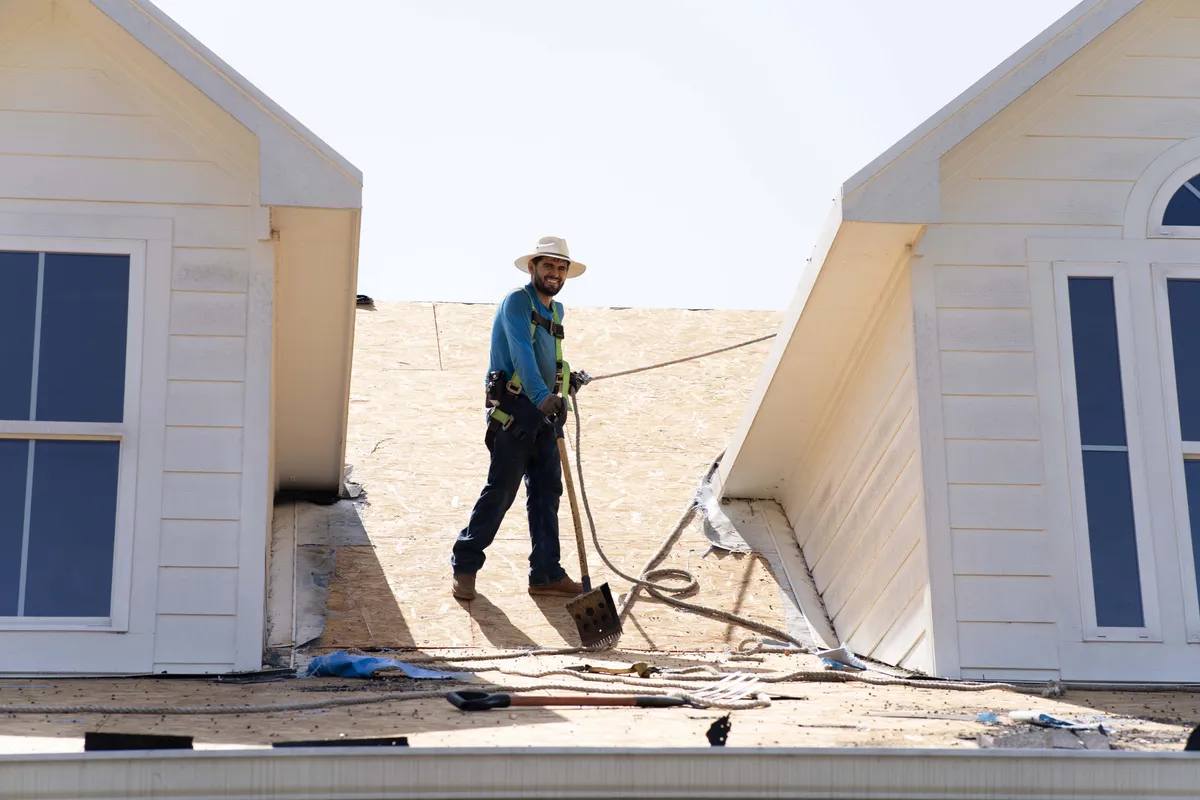
The single biggest factor in getting your roof claim approved is what happens at the adjuster inspection, and the way to make it count is by having a knowledgeable local roofer on the roof at the same time to document every point of damage in writing so the adjuster sees everything. An insurance adjuster might inspect several roofs in a day — they're there to assess what they see. If they see less, you get less. It's that simple, and it's not personal.
When I meet an adjuster on a roof, I'm pointing out the bruising, the soft spots, the dented accessories, the collateral damage on the ground — all of it. I'm making sure what's really there gets written down, photographed, and counted. That's the difference between damage that gets documented and damage that gets missed. A homeowner standing in the yard hoping for the best just doesn't have the leverage to make that happen.
- Have your roofer physically on the roof with the adjuster
- Get damage marked, photographed, and documented in real time
- Make sure collateral damage (gutters, screens, vents) is included
- Don't accept a verbal "looks like minor damage" at face value
Pro Tip: If the adjuster and your roofer disagree on the roof, that disagreement needs to be captured right then — in photos and notes — not sorted out later over the phone when it's your word against theirs.
4. What to Do When You Get a Low Estimate or a Denial
If your estimate came back low or your claim was denied, you are not done — you have the right to dispute it with additional documentation, and most low offers and denials get overturned when the missed damage is properly re-presented. A denial isn't always a "no." A lot of times it's a "you didn't show us enough." That's where a supplement comes in: a formal, documented request to re-evaluate based on damage the first inspection missed or underpriced.
The insurance game, as I've learned it from both sides over the years, runs on documentation. Feelings don't move a claim. Photos, measurements, code requirements, and a clear written account of what's actually wrong — that's what moves it. When I take on a low estimate, I'm not arguing louder, I'm building a case the adjuster can't ignore. You can also request a different adjuster or a re-inspection if the first one wasn't thorough.
- A denial often means under-documented, not "no damage"
- Request a re-inspection or a supplement with new evidence
- Make sure building code upgrade requirements are accounted for
- Keep everything in writing — email beats phone calls for proof
Pro Tip: Don't sign off on or cash anything until you understand exactly what the offer covers. Once you accept, reopening that claim gets a whole lot harder.
5. Use a Licensed Local Roofer, Not an Out-of-Town Storm-Chaser
The smartest move you can make in a hail claim is hiring a licensed, local roofer who'll still be here after the work is done — because the out-of-town storm-chasers vanish when you need them, and they take your warranty with them. Texas doesn't even require a license to roof, so a guy can slap a magnet on his vehicle, blow through town after a storm, overpromise on your claim, and be three states away by the time a leak shows up. That's not who you want fighting your insurance battle.
A local company has skin in the game. We've got a reputation to protect, an office you can walk into, and we're going to stand behind the warranty. When you pick a roofer that's licensed by RCAT and recognized by major manufacturers, you're picking someone the insurance company has to take seriously — and someone who'll be around long after the check clears.
- Local roofers stay for the warranty; storm-chasers don't
- Licensing and manufacturer certification carry weight with adjusters
- You can verify a local company's reviews and reputation easily
- The lowest, fastest bid is rarely the cheapest over the life of a roof
Pro Tip: Ask any roofer flat out: "Will you be at my adjuster meeting, and will you be here in five years if I have a problem?" The honest local ones say yes without blinking.
What I've learned about hail claims after years in the field
I grew up poor in Tyler — raised by my mother in a little shack — and that childhood taught me that you don't get anything by sitting on your hands. You get out and do the work. That's exactly the energy I bring to every hail claim: I give 110% documenting every bit of damage and walking the roof with your adjuster so nothing gets missed. The insurance process scares people, and I get it. It's confusing, it feels rigged, and most folks have never done it before. My whole job is to carry that weight for you.
What I stand for is honesty and integrity, period. I'm not going to tell you that you have a claim if you don't, and I'm not going to let an adjuster shortchange you on one you do have. When I give you my word, it's written in stone. I built Advantage Roofing Company back in 2008 on that principle, and nearly eighteen years later it's still the whole point.
The industry's got a trust problem because Texas treats roofing like the wild, wild West — no license required, crooks everywhere. I decided a long time ago to be the exact opposite of that. We will never cut corners to save a dollar, because a bad install leads to leaks, mold, and a roof you'll be fighting about for years. You can read more about how we do things at Advantage Roofing Company.
My approach is simple: ask questions first to confirm there's a real problem I can solve, then document it thoroughly. That's the difference. I'm not here to make a sale — I'm here to get your roof handled right.
How Advantage Roofing Company helps East Texas homeowners win hail claims
If you've got hail or wind damage and you're staring at a low estimate, a denial, or a claims process that makes your head spin, that's exactly what we do all day long at Advantage Roofing Company here in Tyler, Texas. We'll come out, give you an honest inspection, tell you straight whether you've got a real claim, and if you do, we'll be on the roof standing beside your adjuster making sure every bit of damage gets documented and counted.
We specialize in new roofs and storm, hail, and wind restoration, including documenting the damage and walking the roof with the adjuster so nothing gets missed across East Texas, Northeast Texas, and North Texas. You don't fight the insurance company — we do. You just live your life while we handle the back-and-forth.
Hit me up anytime for an honest opinion of exactly what I think — call or text, or start at advantageroofingcompany.com. If your roof is five to seven years old or older and you've had a storm roll through, let's go take a look before anybody writes you a bid.
FAQ
How do I get insurance to pay for a new roof from hail damage?
To get insurance to pay for a new roof from hail damage, you document the damage, file your claim within your policy deadline, have a licensed roofer attend the adjuster inspection to point out all the damage, and dispute any low estimate or denial with supplemental evidence. At Advantage Roofing Company in Tyler, Texas, we document the damage and walk the roof with the adjuster so nothing gets missed.
How long do I have to file a hail damage roof claim in Texas?
Most Texas homeowner policies give you a limited window after the date of loss to file a hail damage claim, so you should file as soon as you confirm real damage. Check your specific policy and the Texas Department of Insurance for your rights, and don't sit on it — waiting too long is one of the easiest ways to lose a legitimate claim.
What should I do if my roof insurance claim was denied?
If your roof insurance claim was denied, request a re-inspection and file a supplement with new photos, measurements, and documentation of the damage the first inspection missed. A denial often means the claim was under-documented rather than invalid, and at Advantage Roofing Company in Tyler, Texas, we regularly help East Texas homeowners re-present denied and underpaid claims the right way.
Should a roofer be present when the insurance adjuster inspects my roof?
Yes, you should have a licensed local roofer on the roof with the insurance adjuster, because that's where the claim is won or lost. Your roofer can point out bruising, granule loss, and collateral damage in real time and make sure it's documented, instead of leaving it to a quick inspection that counts less than what's really there.
Why should I use a local roofer instead of an out-of-town storm-chaser?
You should use a licensed local roofer because they stay in town, stand behind the warranty, and carry credibility with insurance adjusters, while out-of-town storm-chasers leave after the job and take your warranty with them. Advantage Roofing Company has served Tyler and the surrounding East Texas region for nearly eighteen years, so we're still here when you need us.