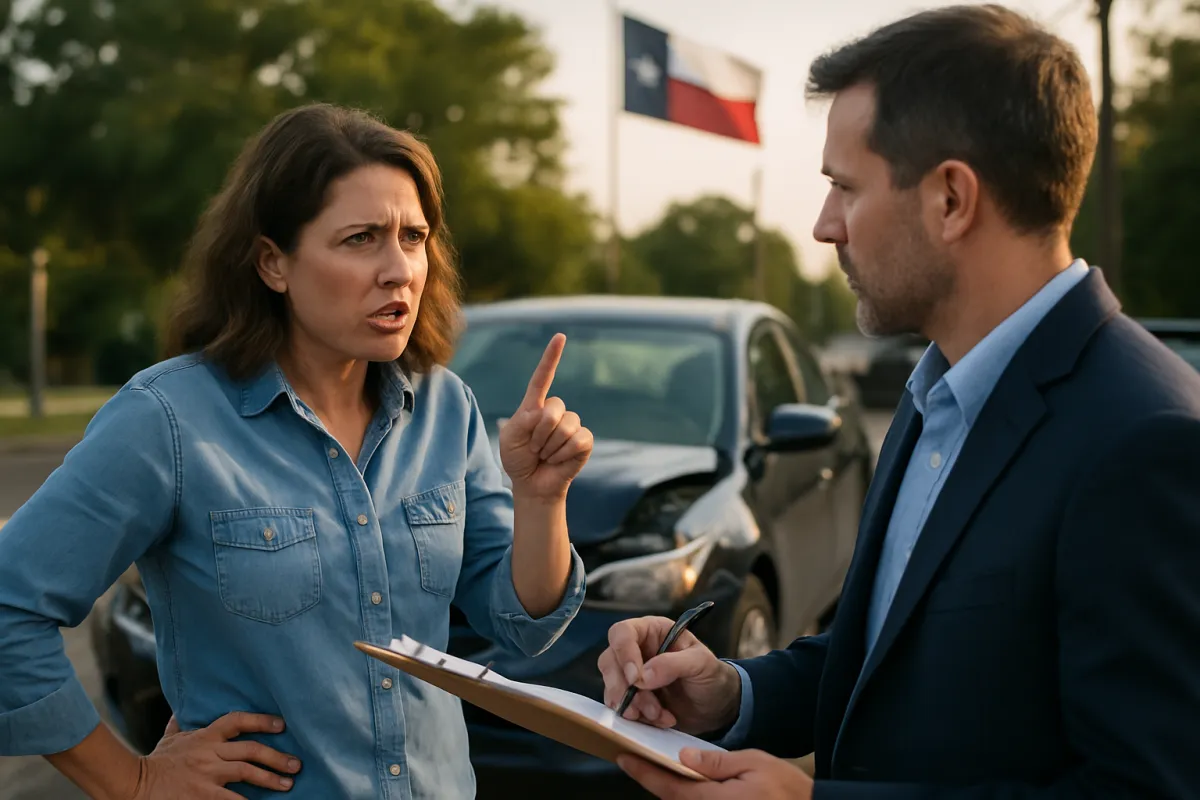
Insurance Adjuster Lowball? Here's How We Fight Back in Texas
If your insurance adjuster just lowballed you, you're not crazy, and you're not stuck. I'm Jay Welling with Advantage Roofing Company right here in Tyler, Texas, and I've spent nearly 18 years going to battle with adjusters so homeowners don't have to lift a finger. A lowball offer isn't the end of the road — it's the start of a conversation, and I'm real good at that conversation. Let's break down exactly what to do.
1. First, Understand What "Lowballing" Actually Looks Like
A lowball happens when the adjuster scopes your roof damage way lighter than what's really there — they'll approve a few shingles instead of the whole slope, or they'll miss hail hits on the soft metals, vents, and turbines entirely. Sometimes it's not even malicious. The adjuster gets 15 minutes on your roof, they're not roofers, and they miss things. Other times, well, let's just say the number always seems to come in low.
The insurance company works for the insurance company — not for you. That's not me being cynical, that's just how the business is set up. The Texas Department of Insurance even lays out that you have the right to dispute a claim decision, but most homeowners never do because they don't know how the game is played.
- The estimate only covers partial repairs when the whole roof needs replacing
- Storm-created damage gets written off as "wear and tear" or "prior damage"
- Soft metals, flashing, vents, and gutters get left off the scope entirely
- The line-item pricing is set below what any real contractor in East Texas charges
Pro Tip: Don't sign or cash anything the second an offer shows up. Once you accept, you've made it a whole lot harder to reopen that claim.
2. Get a Licensed Local Roofer On the Roof Before You Argue
Here's the thing — you can't fight what you can't prove. Before you call the insurance company back all fired up, you need a licensed local roofer to climb up there and document every single hit. That means photos, measurements, a written scope, the whole deal. This is where an out-of-town storm-chaser will absolutely leave you hanging, because they'll be three states away by the time you need them again.
Texas doesn't even require a license to roof — a guy can slap a magnet on his truck and call himself a roofer. So make sure whoever you put on your roof is actually accountable. At Advantage we're RCAT licensed and one of the only Owens Corning Platinum certified contractors in East Texas. That means when we document your damage, it carries weight with the adjuster.
- Insist on a licensed, local roofer — one that'll still be here next year
- Get a written, itemized estimate you can put side-by-side with the adjuster's
- Make sure every soft metal, vent, and slope is photographed and noted
- Ask if they'll be present when the adjuster comes back out
Pro Tip: Schedule your roofer to be on-site during the re-inspection. An adjuster acts real different when a licensed contractor is standing right there pointing at the hail hits.
3. Request a Re-Inspection — In Writing
If the number came in low, you have every right to ask for a re-inspection. Do it in writing — email or a documented phone call — and be specific about what you believe was missed. Don't just say "I disagree." Say "the scope missed the north and west slopes, the ridge vents, and the collateral damage to the gutters and downspouts." Specific gets results. Vague gets ignored.
When we handle this for our clients, we meet the adjuster back out at the property and walk the roof with them item by item. Nine times out of ten, half the fight is just showing them what they overlooked the first time around. We're not there to be jerks about it — we're there with facts, photos, and a scope that lines up with reality.
- Put your re-inspection request in writing and keep a copy
- List the specific areas and items you believe were under-scoped
- Reference your independent contractor's documentation
- Be firm and polite — you're building a paper trail, not a fight
Pro Tip: Keep every email, every estimate, every photo in one folder. If this thing escalates, that documentation is your ammunition.
4. Know the Difference Between Supplements and Appraisal
If the re-inspection gets you closer but still not all the way there, that's where a supplement comes in. A supplement is basically an additional request for items the original estimate left off — code upgrades, additional layers, proper flashing, whatever the job actually requires. This is normal, this is legit, and a good roofer submits supplements all the time to make sure the job gets done right.
If you and the insurance company still can't get on the same page, most policies have an appraisal clause. That lets both sides bring in independent appraisers to settle the dispute. It's a bigger step, but it exists for exactly this situation — when the numbers are just flat wrong. You can learn more about your policyholder rights straight from the National Association of Insurance Commissioners.
- Supplements recover items the first estimate ignored — that's not gouging, it's accuracy
- Never cut corners on the scope just to make the insurance number work
- The appraisal clause is your backstop when negotiation stalls
- Building code requirements often force items the adjuster left off
Pro Tip: If a "roofer" tells you they'll just do the job for whatever the insurance paid, no supplement, no questions — run. That usually means corners are about to get cut on your biggest investment.
5. Watch Out for the Fly-By-Nights Making It Worse
Storm season in East Texas brings out the slime balls — out-of-town storm-chasers who blow into town, promise you the moon, and vanish with your warranty in their back pocket. These guys will tell you anything to get you to sign. They'll cut corners on the install to pocket the difference, and when your roof starts leaking in two years, good luck finding them.
A bad install leads to leaks, mold, and worse — and if the company that did it is gone, you're eating that repair yourself. This is exactly why I preach using a licensed, local company. We deal with one of the largest investments a homeowner will ever make, so getting it right is critical. We will never cut corners to save a dollar. Ever.
- Out-of-town storm-chasers take your warranty with them when they leave
- Check for real credentials — BBB accreditation, manufacturer certification, RCAT licensing
- A local company is accountable long after the check clears
- Cheapest bid usually means cheapest work
Pro Tip: Look up any contractor's Google reviews before you sign a thing. We've got over 400 in East Texas and nearly 1,000 five-star reviews across Texas — that track record didn't happen by cutting corners.
What I've learned about fighting adjusters after years in the field
I started this company back in 2008 because the outfit I was working for was screwing me over on pay. One of my customers heard about it, came up to me, and asked why I didn't just start my own roofing company — so we did. Nearly 18 years later, I've sat across from more adjusters than I can count, and I'll tell you the same thing I tell everybody: the insurance company is not the enemy, but they're sure not on your side either. You need somebody on YOUR side.
My whole approach starts with asking questions first. When you call me, I'm not going to sell you a roof you don't need. I'm going to ask what happened, look at what's really going on, and confirm there's a real problem I can solve. Then I go give 110% so you don't have to lift a finger through the whole insurance mess. That's the deal. When I give you my word, it's written in stone.
I grew up poor in Tyler, in a little shack, and that taught me you don't get anything by sitting on your ass — you get out there and do the work. It also taught me what it feels like to get taken advantage of, and I promised myself I'd be the opposite of that. That's why honesty and integrity aren't marketing words to me. They're the whole point. You can read more about how we operate over at Advantage Roofing Company.
How Advantage Roofing Company helps East Texas homeowners fight lowball adjusters
Here's what we actually do for you: we get up on your roof, document every bit of storm, hail, and wind damage, and build a scope that reflects what the job truly needs. Then we meet your adjuster at the property, walk them through it item by item, and submit supplements for anything they left off. We handle the back-and-forth so you can go live your life while we go to battle for you.
We're BBB A+ accredited, RCAT licensed, and one of the only Owens Corning Platinum certified contractors in East Texas — so when we document your claim, it carries real weight. We're right here at 16678 State Hwy. 155, Suite 300A in Tyler, Texas, and we're not going anywhere. That means your warranty means something, and when you need us three years from now, we'll pick up the phone.
Don't get taken by some out-of-town roofer. If your adjuster lowballed you, hit me up — call or text (903) 939-3168, or head over to Advantage Roofing Company and let's get your claim looked at the right way. Ain't nothing to it but to do it. Let's go.
FAQ
What should I do if my insurance adjuster is trying to lowball me?
Don't accept or cash anything yet. Get a licensed local roofer to document all the damage, then request a re-inspection in writing with the specific items you believe were missed. A good contractor will meet the adjuster on-site and negotiate the scope for you.
Can a roofer negotiate with my insurance adjuster for me?
Yes, and a good one should. At Advantage Roofing Company in Tyler, Texas, we meet the adjuster at your property, walk the roof item by item, and submit supplements for anything they left off — so you don't have to lift a finger.
Is it legal for an insurance company to lowball my roof claim?
The insurance company will scope what they scope, but you have the right to dispute it. Texas policyholders can request re-inspections, submit supplements, and even invoke the appraisal clause in their policy if the numbers don't line up with reality.
How do I know if my adjuster missed damage on my roof?
You usually don't unless a licensed roofer gets up there and checks. Adjusters commonly miss hail hits on soft metals, vents, flashing, and back slopes — that's exactly the stuff we document to build a full, accurate claim.
Why shouldn't I just use the cheapest roofer to match my insurance payout?
Because cheap usually means cut corners, and a bad install leads to leaks, mold, and worse. Out-of-town storm-chasers also take your warranty with them when they leave — always use a licensed, local company that'll still be here when you need them.